2026-10-18 ·
How Orlando Homeowners Can Check for Water Damage After Summer Storms
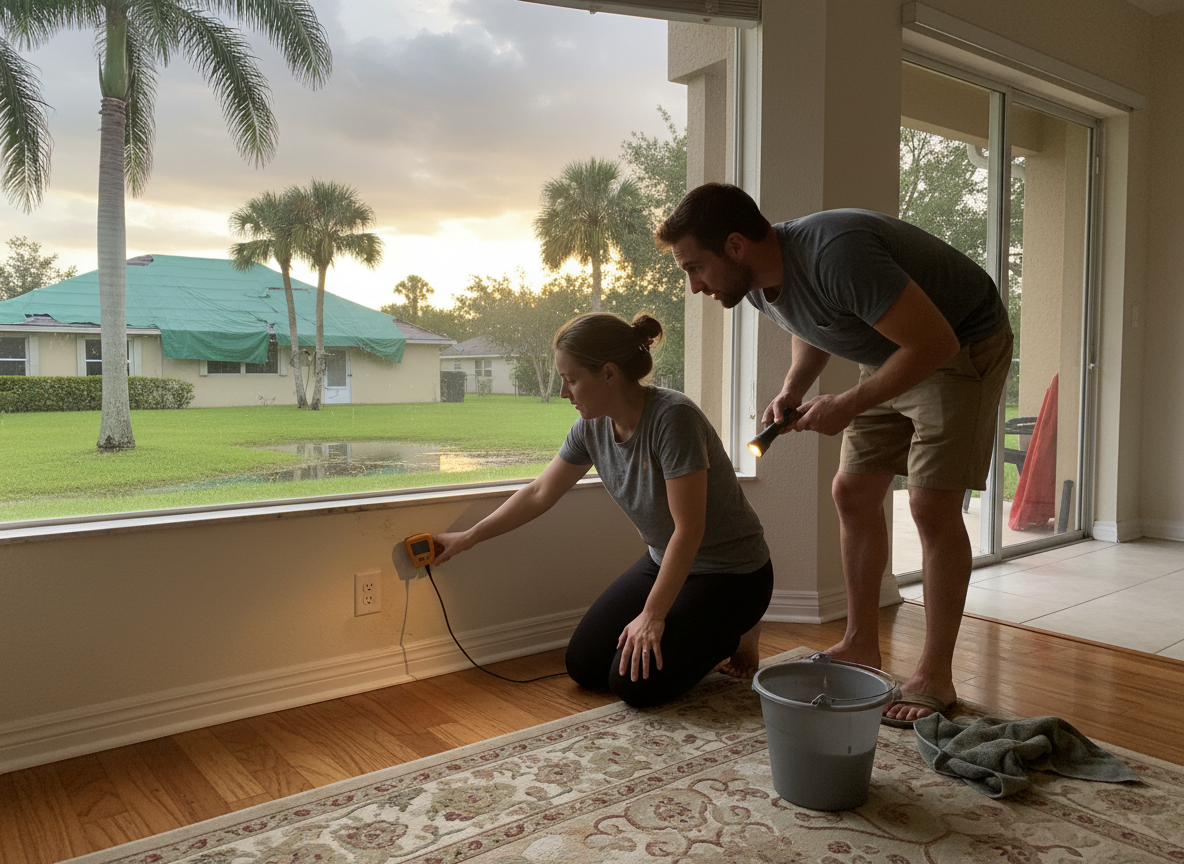
Orlando homeowners should begin checks within 24–48 hours after a summer storm passes, focusing first on attics, ceilings, and exterior walls where rainwater often enters through wind-driven leaks. In Orange County's humid subtropical climate, moisture lingers longer than in drier regions, raising risks in older housing stock found in College Park and Ivanhoe Village.
Checking Roofs and Attics for Storm Intrusion
Start at the roofline by scanning for missing shingles or debris piles that block drainage, especially after the heavy downpours common in Orlando summers. Climb into the attic during daylight and look for dark stains on rafters or insulation that feel damp to the touch. In neighborhoods such as Mills 50 and Downtown Orlando, many homes built before 1980 have older roof underlayments that fail faster under repeated thunderstorm stress. Use a bright flashlight to inspect around chimneys and vents where flashing often separates. Note any musty odor that signals trapped moisture, and mark locations with tape for later reference. If insulation appears clumped or discolored, remove a small section carefully to check the sheathing beneath. These steps help identify entry points before water migrates downward into living spaces.
Examining Walls, Ceilings, and Windows
Walk through each room and press on drywall near windows and exterior doors, feeling for softness or cool spots that indicate saturation. In Thornton Park and Baldwin Park, stucco and wood-frame homes often show water lines on baseboards after storms push rain against foundations. Check around the Orange County Courthouse area where older masonry can hide seepage behind plaster. Run your hand along ceiling joints for bubbling paint or sagging sections. Open closets and inspect corners where airflow is limited, as humidity from afternoon thunderstorms keeps surfaces damp. Use a moisture meter on suspect spots if available; readings above 15 percent warrant further attention. Document any discoloration with photos and dates to track progression.
Assessing Floors and Lower Levels
Lift carpet edges in high-traffic areas and check for darkened padding or musty smells that develop quickly in Orange County's moisture-heavy air. In Kissimmee and Altamonte Springs homes with slab foundations, look for efflorescence on concrete floors near exterior walls. Hardwood in College Park properties can cup or separate when water sits beneath, so examine baseboards for gaps. Test vinyl or tile by tapping for hollow sounds that suggest delamination. Pay special attention to laundry rooms and bathrooms where storm runoff can back up through drains. If floors feel spongy underfoot, avoid heavy furniture placement until drying occurs.
Watching for Secondary Issues Like Mold
Monitor for dark spots on walls or ceilings within 3–5 days, as Orlando's humidity accelerates growth in water-damaged materials. Properties near Lake Eola Park or Harry P. Leu Gardens often sit in low spots where drainage slows after storms. Understanding mold risks from flooding in low-lying areas of Orlando explains how local terrain affects these timelines. Check behind appliances and in crawl spaces common to Winter Park homes. Early detection prevents larger problems that require structural drying services.
Knowing When Professional Help Is Needed
If visible signs persist beyond a week or moisture readings stay elevated, contact a local water damage restoration team familiar with Orange County conditions. Homeowners in Ivanhoe Village and Mills 50 benefit from technicians who understand the mix of historic and mid-century construction. Step-by-step guide to drying out water-damaged carpets in humid Florida conditions offers additional techniques. Track any new odors or health symptoms that could tie to hidden moisture. Based at 4701 Millenia Blvd, Suite 175, Orlando, FL 32839, crews can assess specific properties without delay.