2026-10-18 ·
Step-by-Step Guide to Drying Out Water-Damaged Carpets in Humid Florida Conditions
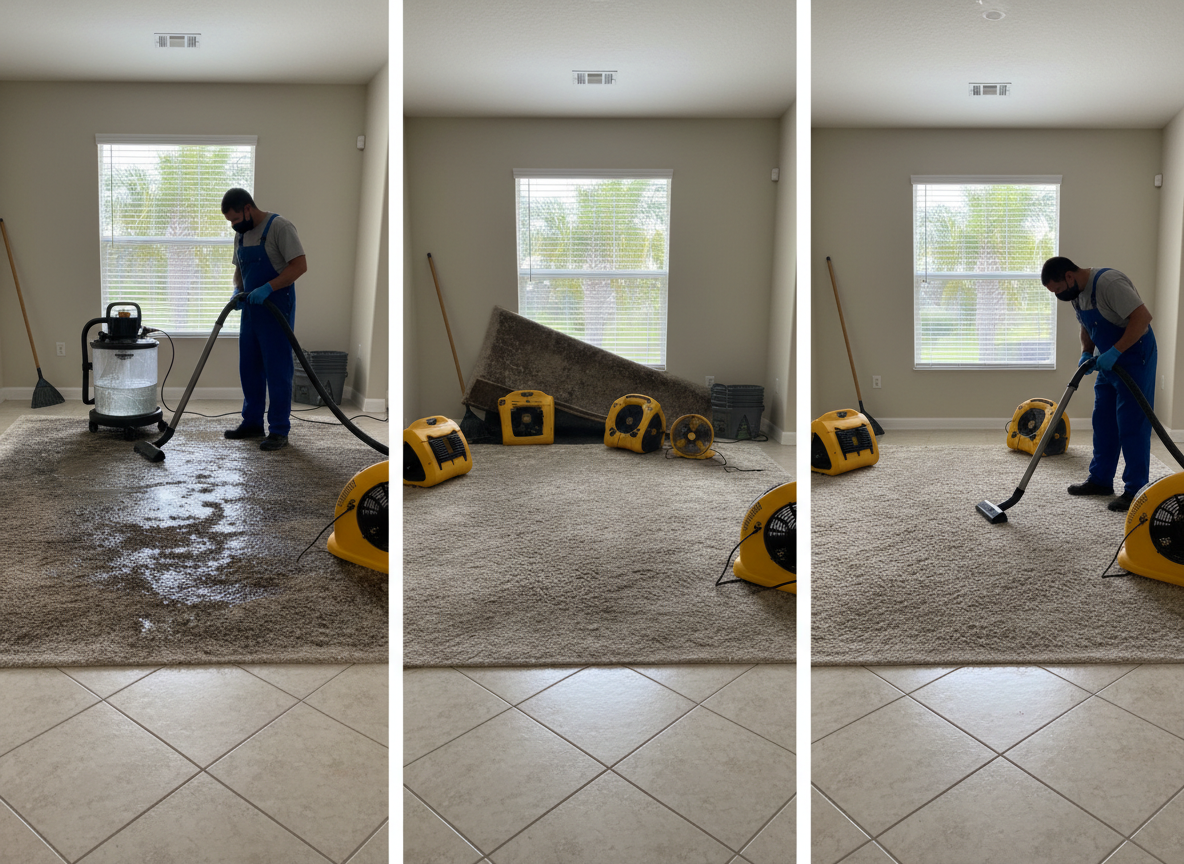
Drying water-damaged carpets in Orlando's humid subtropical climate usually takes 48 to 72 hours with commercial equipment when started within the first 24 hours of exposure. Afternoon thunderstorms common across Orange County push moisture levels higher, so standard household fans alone rarely finish the job before secondary damage begins in areas like College Park or Mills 50.
Initial Assessment and Safety
Walk the affected rooms and note how far water traveled under baseboards and into padding. In older Thornton Park and Ivanhoe Village homes, original hardwood subfloors often sit beneath carpet, so lift corners to check for trapped moisture that can wick into walls. Turn off power to outlets near wet areas and wear rubber boots when standing water exceeds one inch. Document the water source and extent with photos before any drying begins. This record helps coordinate with structural drying teams if the job expands beyond carpets. Check for hidden leaks around windows common in Baldwin Park properties built before 1990.
Extracting Standing Water
Use a portable extractor with a wand attachment to pull as much liquid as possible from the carpet face and backing. Move furniture out of the room first so equipment can reach every section without obstruction. In low-lying sections of Downtown Orlando near Lake Eola Park, water from storms can pool longer, requiring multiple passes with the extractor. Remove saturated padding completely because it holds moisture against the subfloor and promotes rapid mold growth. Place extracted water in sealed containers for disposal rather than dumping it outside where it can re-enter the structure during the next thunderstorm.
Setting Up Drying Equipment
Position commercial air movers at a 45-degree angle along walls to create airflow across the carpet surface. Pair them with dehumidifiers rated for at least 70 pints per day to pull humidity out of the air in Orange County's typical 75 to 85 percent relative humidity. Run equipment continuously for the first 24 hours, then check moisture readings every eight hours with a meter inserted into the carpet backing. Adjust fan placement if readings stay above 15 percent moisture content. Homes in Winter Park with thicker padding often need an extra dehumidifier unit compared with thinner installations found in newer Altamonte Springs builds.
Monitoring Progress in Local Conditions
Track indoor humidity with a digital meter placed away from vents. Orlando's frequent storms can raise outdoor humidity back above 80 percent within hours, so keep windows closed during equipment operation. Re-check carpet edges near exterior doors in College Park where wind-driven rain often enters. If moisture levels drop below 10 percent after 48 hours, reduce fan speed but continue dehumidification for another 12 to 24 hours to handle residual humidity. Document daily readings to confirm the carpet and subfloor have returned to normal moisture ranges before reinstalling furniture.
Preventing Mold After Drying
Apply an antimicrobial treatment to the carpet backing only after the material tests dry. In Kissimmee and south Orlando properties near drainage canals, residual soil moisture can reintroduce spores if carpets are reinstalled too soon. Vacuum the dried carpet thoroughly to remove loosened fibers and any remaining particulates. Schedule a follow-up visit 72 hours later to confirm no hidden pockets remain. Homeowners who notice musty odors after this period should review the related guide on checking for water damage after summer storms before conditions worsen.